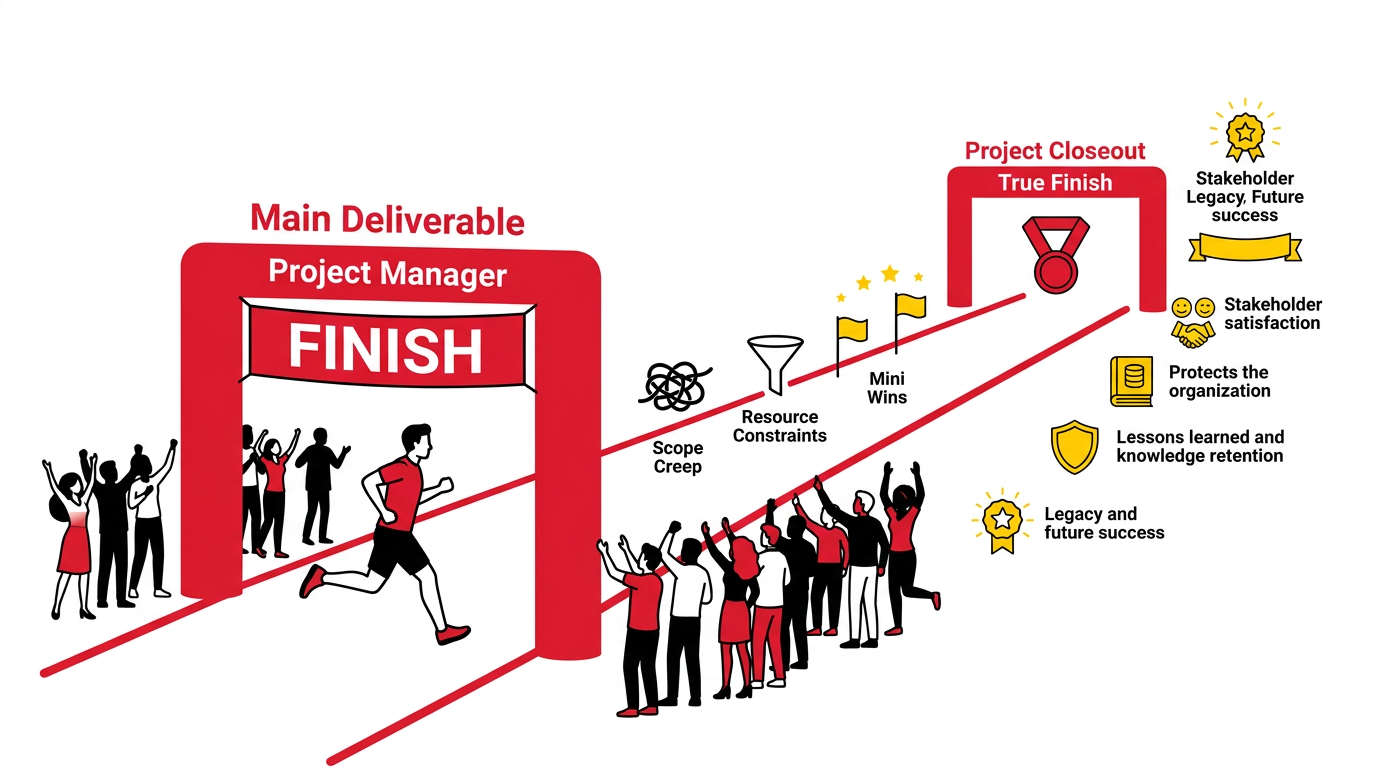
So, the finish line is in sight. You’ve navigated the treacherous waters of scope creep, wrestled with resource constraints, and celebrated those mini-victories along the way.
But hold on a minute – just because the main deliverable is out the door doesn’t mean the project is truly DONE.
Skipping the closing phase is like running a marathon, collapsing just before the final sprint, and never getting your medal.
It’s an all-too-common mistake that can leave loose ends, dissatisfied stakeholders, and a missed opportunity to learn and grow.
This guide isn’t just about ticking boxes; it’s about ensuring your project ends with a bang, not a whimper.
It’s about securing your project’s legacy, protecting your organization, and setting yourself and your team up for even greater success next time. Let’s dive in.

Why Project Closing Isn’t Just an Afterthought – It’s Your Grand Finale
Think of project closing as the final, critical act in a grand play. You wouldn’t let the curtain drop while the actors are still on stage fumbling for their lines, would you?
Yet, many projects end with a similar lack of grace.
Teams often breathe a collective sigh of relief when the main objective is achieved, then scatter like confetti after a parade, leaving a mess for someone else to clean up.
This “grand finale” isn’t merely administrative overhead; it’s where you solidify your gains, mitigate future risks, and extract invaluable lessons.
A well-executed close ensures:
- Legal and Financial Closure: No lingering contractual disputes, unpaid invoices, or unreturned equipment.
- Stakeholder Satisfaction: Formal acceptance ensures everyone is on the same page about what was delivered.
- Knowledge Retention: The wisdom gained doesn’t walk out the door with your team members.
- Organizational Learning: You identify what went well and, more importantly, what didn’t, preventing future missteps.
- Team Morale: Acknowledging efforts and celebrating success provides a powerful boost.

Neglecting this phase is like leaving money on the table or, worse, inviting future headaches. It’s your last chance to tie up every loose thread and leave a lasting, positive impression.
Phase 1: Dotting the Financial I’s and Crossing the Legal T’s
Without a meticulous approach here, you risk financial liabilities, legal disputes, and a general air of unprofessionalism.
Think of it as meticulously cleaning up after a massive construction project; you can’t just leave tools, debris, and open permits lying around.
Completing All Contractual Obligations
Your project began with a contract, whether formal or informal, outlining what you promised to deliver.
Now is the time to verify that every single clause has been met, not just the flashy main deliverables.
Did you agree to provide five training sessions? Deliver all five.
Was a specific type of documentation required? Ensure it’s complete and submitted.
This isn’t about doing extra work; it’s about proving you’ve done all the agreed-upon work.

Go back to your original statement of work, your project charter, and any change orders.
Systematically check off each commitment. If there were any deviations or unfulfilled items, document them, explain the reasons, and get formal sign-off from relevant parties.
This proactive approach prevents nasty surprises down the line and protects your organization from potential legal challenges or financial penalties.
Remember, a handshake is great, but a signed document is better when it comes to contractual closure.
Finalizing Financial Records and Invoices
This is where you make sure every penny spent and every penny earned is accounted for. It’s about financial tidiness and accuracy.
First, gather all outstanding invoices from vendors and subcontractors.
Verify their accuracy against purchase orders and work performed. Approve and process them promptly.
Nothing sours a relationship faster than late payments.

Simultaneously, ensure all your own invoices to the client are submitted, accurate, and ready for payment.
Reconcile all project-related expenses – travel, materials, software licenses, consulting fees – against your budget.
Identify any discrepancies and understand why they occurred.
The goal is to bring your project budget to a definitive close.

You should be able to produce a final financial statement for the project that clearly shows total costs incurred versus the approved budget and the revenue generated.
This isn’t just for accounting; it provides crucial data for future project estimations and demonstrates fiscal responsibility.
Releasing Resources and Closing Accounts
Imagine a project ending, but the project management software license is still running, or a team member is still booked to a project code that no longer exists. This is wasteful and inefficient.
Start by systematically releasing all project-specific resources.
This includes:
- Human Resources: Formally release project team members from their duties. Update their assignments in your HR system. This frees them up for new projects and clarifies their roles.
- Physical Assets: Collect all project-issued equipment (laptops, phones, tools, vehicles). Ensure they are in good condition and returned to inventory or repurposed.
- Software Licenses: Deactivate or transfer any software licenses tied specifically to the project.
- Access Credentials: Revoke access to project-specific systems, databases, and physical locations for all external parties and, where appropriate, internal team members no longer needing it.
- Project-Specific Accounts: Close out any temporary bank accounts, credit card accounts, or vendor accounts established solely for the project.
This step prevents ongoing costs, frees up assets, and tightens security. It’s about tidying up the physical and digital footprint of your project.
Phase 2: Formalizing Project Acceptance and Handover
You’ve delivered the goods, but until the client or key stakeholders formally accept them, your project isn’t truly done. This phase is about formalizing that acceptance and ensuring a smooth transition to operational status.
Obtaining Formal Stakeholder Acceptance
This is your official “seal of approval.” It’s the moment when the client, end-users, or relevant internal stakeholders formally acknowledge that the project’s deliverables meet the agreed-upon requirements and expectations. Without this, you leave yourself vulnerable to future disputes or claims of non-delivery.
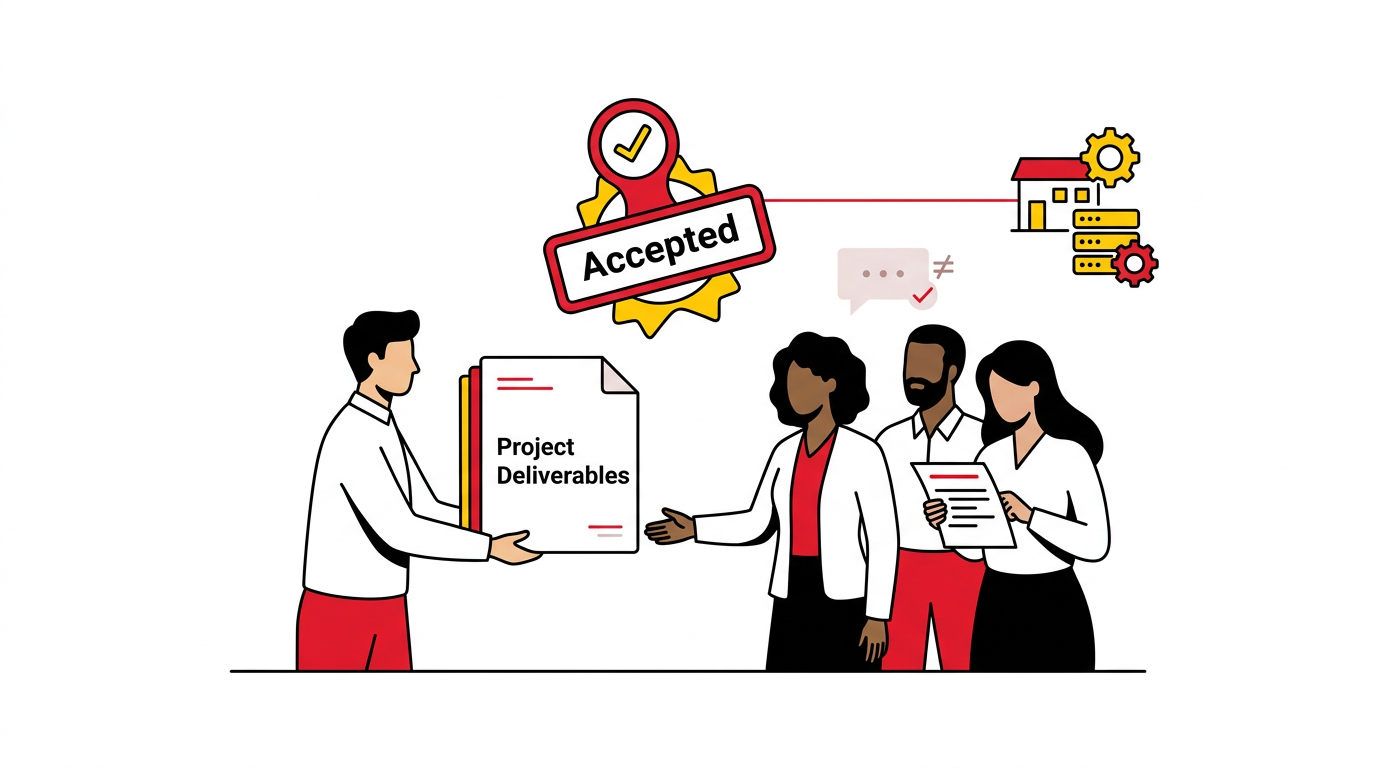
Don’t assume silence means acceptance. Actively seek it out.
This usually involves:
- Review and Validation: Present the final deliverables for review. This might be a demonstration, a detailed walkthrough, or a period of user acceptance testing (UAT).
- Sign-off Document: Prepare a formal acceptance document. This could be a “Project Completion Certificate” or a “Deliverable Acceptance Form.” It should clearly state what is being accepted, refer to the original requirements, and include a signature line for the key stakeholders.
- Addressing Outstanding Issues: If there are minor issues or punch-list items, clearly document them, agree on who will resolve them (the project team or the operational team), and get sign-off that the project is complete, even if minor operational tweaks remain.
This step protects your team from scope creep after the project concludes and provides clear evidence that you fulfilled your obligations. It’s the critical handshake that signifies the transfer of ownership.
Documenting and Archiving Project Deliverables
Imagine starting a new project only to realize that a similar one was done five years ago, but no one can find any of the documentation. Frustrating, right? This is why meticulous documentation and archiving are non-negotiable.

Gather ALL final project deliverables, including:
- Core Products/Services: The actual output of the project.
- Documentation: User manuals, technical specifications, design documents, test plans and results, architecture diagrams, code repositories, training materials.
- Communication Records: Key emails, meeting minutes, decision logs, change requests.
- Financial Records: Budgets, invoices, expense reports.
- Legal Documents: Contracts, agreements, permits.
Organize these documents logically within a secure, accessible repository.
This could be a shared drive, a document management system, or a cloud-based platform.
Ensure proper version control is in place. Label everything clearly so it can be easily retrieved years down the line.
This archive serves multiple purposes: it’s a historical record, a reference for future projects, and crucial evidence if any disputes arise.
Think of it as building a comprehensive library of your project’s journey.
Facilitating Knowledge Transfer and Training
The project’s success often relies on the expertise built within the project team. When the project closes, this knowledge can evaporate if not deliberately transferred.
This is especially true when moving from a project team to an operational or maintenance team.
- Identify Key Knowledge Holders: Who on your team holds critical, unique insights about the project?
- Develop a Transfer Plan: This could involve structured handover meetings, creating detailed “how-to” guides, updating internal wikis, or even pairing project team members with operational staff for a short period.
- Conduct Training Sessions: If the project delivered a new system or process, ensure the people who will be using or maintaining it are adequately trained. Don’t assume they’ll just “figure it out.” Provide comprehensive, hands-on training that addresses common scenarios and potential issues.
- Create a Support Structure: Define who will be responsible for ongoing support, maintenance, and future enhancements. Document contact points and escalation paths.

Effective knowledge transfer ensures the project’s output remains viable and sustainable long after your project team has moved on.
It prevents the operational team from having to “reinvent the wheel” or struggle unnecessarily.
Phase 3: The Crucial Project Review and Performance Evaluation
This is where you turn experiences into insights. Without reflecting on what happened, you’re doomed to repeat mistakes and miss opportunities for improvement. This phase is about learning from your journey.
Conducting a Post-Mortem or Lessons Learned Session
This is arguably the most valuable part of project closure for future endeavors. A “post-mortem” (or “lessons learned” session, if you prefer less morbid terminology) is a facilitated discussion where the project team, and sometimes key stakeholders, reflect on the entire project lifecycle.
Schedule a dedicated, open, and psychologically safe session. The goal isn’t to point fingers, but to identify objective truths.

Encourage candid discussion around:
- What went well? Celebrate successes and understand why they were successful so you can replicate them.
- What didn’t go well? Be honest about challenges, failures, and deviations.
- What could have been done differently? Focus on actionable improvements for processes, tools, communication, and planning.
- What surprised us? Unforeseen obstacles or opportunities.
- What lessons can we apply to future projects? This is the core output.
Document these lessons learned thoroughly. Create an action plan for how these lessons will be integrated into future project methodologies, training, or organizational processes.
This collective wisdom becomes an invaluable asset for your organization.
Assessing Project Performance Against Objectives
Remember those objectives you meticulously defined at the start of the project? Now is the time to see how well you measured up.
This isn’t just a subjective feeling; it’s about objective evaluation.
Go back to your project charter or project plan and list out every stated objective, both qualitative and quantitative.
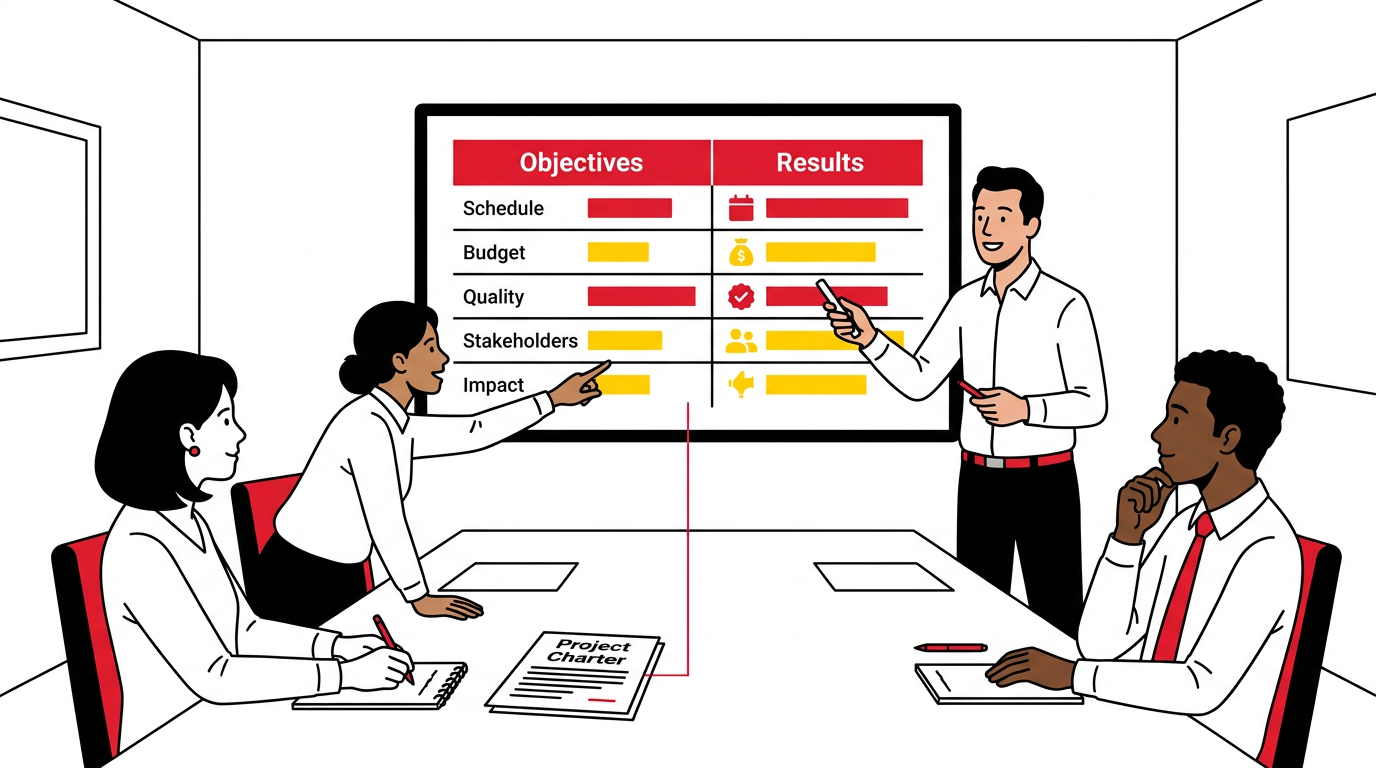
Then, gather the data and evidence to assess performance against each one:
- Scope: Was everything delivered? Was anything added or removed?
- Schedule: Was the project completed on time? If not, by how much and why?
- Budget: Was the project completed within budget? If not, what were the variances?
- Quality: Did the deliverables meet quality standards? Were there defects or rework?
- Stakeholder Satisfaction: What was the client’s or end-user’s feedback?
- Business Benefits: Have the anticipated benefits been realized, or are they on track to be realized? (Some benefits may only manifest post-project).
Compile this assessment into a concise summary. This provides an honest evaluation of the project’s overall success and contributes valuable data to your final project closure report.
Evaluating Team Performance and Providing Feedback
Your team poured their energy and expertise into this project. The closing phase is the perfect, and often final, opportunity to acknowledge their contributions and provide constructive feedback.

- Individual Performance Reviews: Conduct one-on-one sessions with each team member. Discuss their strengths, areas for development, and specific contributions to the project. Frame feedback in a supportive and growth-oriented way.
- Team Performance Assessment: Reflect on the team’s dynamics. How effective was communication? How well did they collaborate? Were there any recurring challenges within the team?
- Recognition: Highlight specific achievements and positive behaviors. Publicly acknowledge outstanding contributions where appropriate.
This feedback loop is crucial for individual growth and for fostering a high-performing project culture. It demonstrates that you value your team members, not just their output.
Phase 4: Celebrating Success and Disbanding the Team
You’ve worked hard, endured challenges, and ultimately, delivered. Don’t let the project fizzle out without acknowledging the effort and commitment that made it all possible. This phase is about acknowledging the human element.
Recognizing and Celebrating Team Achievements
This isn’t just a feel-good exercise; it’s vital for morale, motivation, and future engagement. People want to feel appreciated and that their hard work matters.
Organize a team celebration.

This could be a team lunch, a small happy hour, a formal recognition event, or even just a heartfelt email acknowledging everyone’s contribution.
Be specific in your praise – highlight particular challenges overcome, innovative solutions, or exceptional effort.
- Public Acknowledgment: If appropriate, share the project’s success and acknowledge the team’s role with senior management or across the organization.
- Individual Recognition: Consider small tokens of appreciation, personalized thank-you notes, or awards for outstanding performance.
A proper celebration closes the loop psychologically for the team, providing a sense of accomplishment and reinforcing a positive work culture. It helps people feel ready to tackle the next challenge.
Formally Releasing Project Team Members
Once the celebration is over and all tasks are completed, it’s time to officially transition team members off the project.
This might seem minor, but it has practical implications.
- Communicate Clearly: Inform team members individually and as a group that their roles on the project are officially concluded.
- Update Systems: Ensure all internal systems (resource allocation, timesheets, HR records) reflect their new status. This prevents lingering administrative issues and ensures accurate billing/allocation.
- Discuss Next Steps: For internal team members, discuss their next assignments or career development opportunities. For contractors, ensure all contractual obligations are met.

This formal release provides clarity for everyone involved, allowing team members to fully disengage from the old project and fully commit to their next endeavors.
Phase 5: The Project Closure Report – Your Legacy Document
The project closure report is the definitive summary of your project’s entire journey. It’s not just a collection of facts; it’s your project’s story, its triumphs, its struggles, and its invaluable lessons. Think of it as the ultimate executive summary and knowledge repository.
Elements of a Comprehensive Project Closure Report
A well-structured closure report transforms raw project data into actionable intelligence.
It should be concise yet comprehensive, providing a clear overview for anyone who reads it, from executives to future project managers.
Key elements include:
- Project Overview: A brief summary of the project’s purpose, objectives, scope, and key deliverables.
- Executive Summary: A high-level synthesis of the project’s performance, key successes, major challenges, and overall outcome. This should stand alone.
- Performance Analysis:
- Scope Performance: Was the original scope met? Were there changes?
- Schedule Performance: Final timeline vs. baseline; reasons for variances.
- Cost Performance: Final budget vs. actual spend; variance analysis.
- Quality Performance: Did deliverables meet quality standards? Any significant defects?
- Risk Management: Effectiveness of risk identification and mitigation strategies.
- Stakeholder Satisfaction: Summary of feedback and formal acceptance.
- Lessons Learned Summary: A distilled version of the insights from your post-mortem session, highlighting key takeaways and actionable recommendations for future projects.
- Financial Summary: Final budget reconciliation.
- Resource Utilization: Summary of how human and other resources were used.
- Recommendations: Specific, actionable recommendations for organizational process improvements based on project experience.
- Appendices: References to archived project documentation, formal acceptance sign-offs, and other supporting materials.
This report serves as a historical record, a reference for future planning, and a testament to your team’s efforts.
Beyond the Checklist: Cultivating a Culture of Effective Project Closure
This checklist is a powerful tool, but true mastery of project closure goes beyond simply ticking boxes. It’s about instilling a mindset – a commitment to finishing strong, learning deeply, and continuously improving.
Imagine your organization where every project, big or small, consistently ends with clarity, comprehensive documentation, and valuable insights.
This isn’t just good project management; it’s strategic advantage.
Project closure isn’t just the end of one journey; it’s the bridge to the next.

By embracing it as an essential, strategic phase, you not only ensure each project concludes successfully but also empower your organization to grow smarter, stronger, and more successful with every endeavor.
Now go forth and close those projects like the seasoned pro you are!
Project Management Symposium
Looking to hear more insights from Industry Experts?

You should join us at this year’s Project Management Symposium.
Visit our Website HERE to learn more!
Project Management Programs
Are you looking to expand your project management skills?
With more than 50 courses and 17 professional certifications, our programs are built by industry experts and UMD faculty to address real-world challenges in today’s workplaces.
Some of our most popular certifications include:
- Agile Project Management – Navigate complex projects with adaptive frameworks.
- Construction Management – Strengthen your management expertise in construction projects.
- Artificial Intelligence in Government Procurement – Unlock the power of artificial intelligence to revolutionize government procurement.
- Project Management Professional (PMP) Exam Prep Training – Prepare for the PMP exam with confidence.